What is Fascism, Really?
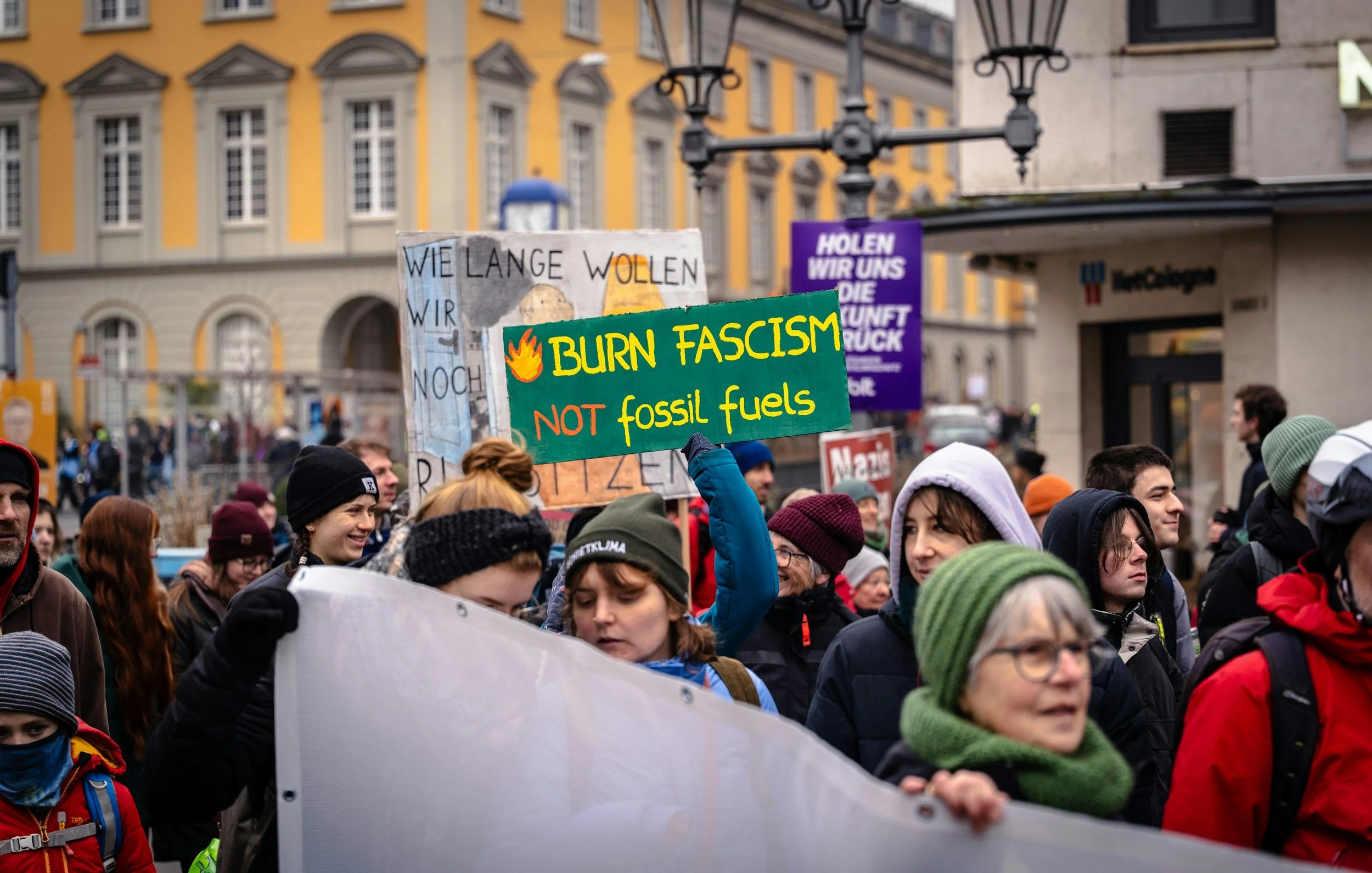
The term "Fascism" has become increasingly ambiguous over time, stripped of the weight it once carried. Once associated with the terrifying realities of the 20th century, it has now morphed into a term often wielded like a spectre to frighten those who disagree. A notable example of this misuse is the frequent comparison of Donald Trump to Adolf Hitler. Recently, amidst the turmoil surrounding immigration enforcement, some have gone so far as to liken these agents to the Gestapo following a tragic incident involving pro-immigration protesters in Minnesota. Such parallels not only distort historical truths but also trivialize the suffering experienced during the Holocaust. .
As accusations of fascism proliferate, the term has been cheapened to a political weapon, used to disparage those outside the elite framework. To foster a clearer understanding, it is crucial to delineate the core characteristics that define fascism.
Defining fascism presents a challenge, as it adapts to varying national contexts. Many misconstrue National Socialism and Fascism as synonymous, yet they diverge significantly. National Socialism, a specific German variant, had its own religious and supremacy ideologies. Clarifying these distinctions can help us uncover the often-overlooked fascist regimes throughout history and examine their commonalities.
Historically, fascist states have pursued expansion and dominance through force and colonisation, frequently fuelled by notions of racial superiority. Despite differing geographical ambitions, Japan in East Asia, Italy in the Mediterranean, and Germany in Eastern Europe, the underlying ideology starkly contrasts with contemporary nationalists, like Trump, who focus on national unity derived from shared culture and history.
A surprising number of experts fail to distinguish between fascism and nationalism. While the former is rooted in racist and imperialistic ideologies, nationalism seeks to unify a nation based on cultural and historical commonalities—a position that is both logical and justifiable. The legacy of fascism is marred by extreme violence, exemplified by events such as the Nanjing Massacre and Auschwitz, atrocities that only a minuscule faction would dare to glorify.
In moving forward, it is essential to re-establish a precise understanding of fascism, to avoid its misuse in contemporary political discourse and ensure that we honour the historical context from which the term arose.
The concept of a powerful leader, capable of uniting the nation through a cult of personality, is a common thread in all fascist regimes. Whether we look at figures such as Mussolini, known as El Duce, or the Japanese Emperor, the belief in the necessity of Great Men of History to steer the nation towards glory prevails. This is visibly manifested through statues and paintings, serving as symbols of the leader’s supremacy, which rests primarily on the trust and near-deification afforded to them by their followers. A quintessential example of this phenomenon is Francisco Franco, who portrayed himself to the Spanish populace as their saviour, leading them away from Marxism and towards a path of stability and security. This template, albeit with some variations, was adopted by every Fascist state, based on the conviction that only a strong leader can preserve the nation.
Fascism positions the leader as the visionary destined to chart the course for a promising future. Contrary to common misconceptions, it is an ideology rooted in an idealised vision of a prosperous and secure nation. In this framework, the leader and the state are viewed as integral to the attainment of a utopian future defined by harmonious class collaboration.
At the heart of fascist ideology lies the state, seen as the living embodiment of the nation. As articulated in Mussolini’s "Doctrine of Fascism" (1932), “if liberalism spells individualism, fascism spells government.” The fascist state was envisioned as a revolutionary instrument for enacting this ideology. Its power transcended traditional governance, engaging in extensive social engineering not only via corporate economic policies but also through the systematic legal and violent repression of Jews and other minorities. Civil society was effectively subsumed under the fascist regime; by the 1940s, all children in Germany were required to join the Hitler Youth, with even Lutheran churches compelled to conform as Nazi-sanctioned “Positive Churches.” Trade unions were integrated into state structures, including the Spanish Organisation of Syndicalist Endeavour (OSE) and the German Labour Front, to eliminate any alternative centres of authority. The individual was systematically diminished, as the nation, embodied by the state, was prioritised above individual concerns, resulting in the state asserting its supremacy over society. Despite often being considered opposites, fascist regimes shared numerous characteristics with their communist counterparts, particularly their totalitarian inclinations.
When discussing democracy, it is essential to clarify what we actually mean by the term. For me, democracy signifies a representative form of governance characterised by checks and balances, where the electorate holds ultimate power through elections. This conception starkly contrasts with fascist ideology, which fundamentally opposes the notion of limitations on the state, arguing that such constraints hinder progress and development. In the fascist worldview, society should not promote equality; rather, inequality is seen as a natural outcome of struggle, with the strongest ascending the social hierarchy. For adherents of fascism, liberal democracy stands in direct opposition to the idea of the nation-state.
While ideological justification for authoritarian regimes may be sparse, the elimination of rights within a totalitarian framework serves to stifle dissent and entrench power. This effectively prevents the emergence of ideas that challenge fascism. Fascists harbour a deep-seated aversion not merely to liberal democratic institutions but to the democratic process itself, striving for their outright destruction; this is a fundamental tenet of fascism.
Although fascism is often regarded as an ambiguous doctrine, it is apparent that all fascist states share certain hallmarks. They typically promote an ideology of racial supremacy, coupled with a cult of personality surrounding their leaders. Furthermore, these regimes tend to be totalitarian in nature and reject individualism outright, opting instead for an authoritarian governance model.
So, who might fit this description in contemporary society? Rather than focusing on the United States and Israel, I argue that Russia and Iran bear closer resemblance to 20th-century fascist regimes. Both governments propagate a specific notion of racial supremacy, which they wield to justify imperialistic ambitions. Both also elevate their leaders to a near-mythical status, fostering a cult of personality, and exhibit totalitarian tendencies. In this context, rather than targeting the United States and Israel, the so-called "anti-fascist" Left ought to direct its indignation towards the atrocities committed by the West's fascist adversaries.