Britain’s long march towards a police state
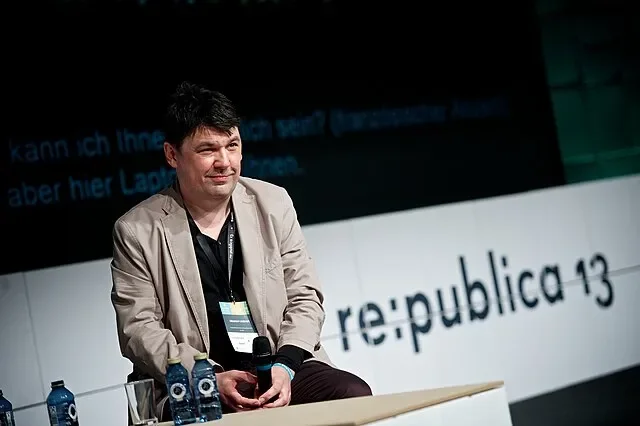
If the news from this week is anything to go by, then Britain is marching towards a totalitarian police state. Comedy writer Graham Linehan was arrested at Heathrow Airport on Monday by five armed police officers. His crime? Making offensive jokes about trans people.
In his Substack blog, Linehan explained that his arrest was for three posts on X. One of the posts read: ‘If a trans-identified male is in a female-only space, he is committing a violent, abusive act. Make a scene, call the cops and if all else fails, punch him in the balls.’
After being arrested, he was interrogated about his political views and held in a cell for 16 hours. He was only released because his blood pressure had reached dangerous levels, and he needed to go to A&E.
This police overreach was cheered on by leftists such as Green Party leader Zac Polanski, who said that it was clearly ‘incitement to violence’. Comedian Marc Burrows also supported the arrest, writing in The Independent, ‘Arresting him isn’t an unprecedented assault on British liberty.’
Even Sky News crime correspondent, Martin Brunt, said of the case: ‘Okay, the law on inciting violence exists and has to be policed, but there are different ways of policing.’
Although from a legal standpoint, while UK law criminalises stirring up religious and racial hatred, and offences like harassment or threats, there is no standalone offence of ‘inciting violence.’ Instead, police often interpret broad laws to cover speech they dislike, giving them wide discretion over what counts as a crime.
Looking at the available evidence, it’s hard to deny that Britain is sliding towards authoritarianism. Linehan’s arrest wasn’t a one-off, isolated incident, but is part of a broader establishment crackdown on free speech. Around 30 people a day in England and Wales are arrested for online speech. The police, captured by Maoist ideology, are routinely arresting people and interrogating them about their political views.
Linehan’s arrest shows that the authorities are willing to use their powers to regulate speech and punish those they disagree with. Now imagine these powers combined with a mandatory digital ID system, a policy being considered by the government. A state that already intervenes in speech would suddenly have the tools to monitor and control everyone’s daily life
I can tell you where the UK’s current path leads. It leads to a repressive society where people are afraid to speak their minds for fear of being persecuted. In China, for example, state censorship is currently so pervasive that political discussion is avoided at all costs. People are especially afraid to discuss sensitive topics such as Tibet, religion, the Chinese Communist Party, and President Xi Jinping.
The UK is not China, but one of the biggest concerns regarding the thousands of police arrests for online speech is the chilling effect it will have on political debate. This embrace of censorship is not a choice made by the British people but part of a left-wing agenda to control the boundary of acceptable discussion and even humour.
Rather than accept the path of tyranny, the British people are waking up. Reform UK, which opposes online censorship and supports free speech, is currently riding high in the polls. The party might not have become so popular if the police and justice system were not cruelly oppressing ordinary British people for opposing trans ideology and mass uncontrolled immigration.
One high-profile example of this is Lucy Connoly, a 42-year-old mother from Northampton, who was sentenced to 31 months in prison for an inflammatory anti-immigration social media post. This itself might not have caused much outrage were it not for the perceived differential treatment of different groups, with Far-Right activists being given harsh sentences while those on the Far-Left are allowed to walk free.
That leftists like Polanski are willing to entertain and support the UK’s current slide towards tyranny shows just how embedded they are within the establishment, so certain they are that state power will never be used against them.
Yet, whether you are on the Left or the Right, we should all be wary of the growing censorship in Britain. From comedy writers and feminists to pro-Palestine activists and conservatives, all are at risk when the police are handed to power to arrest people for expressing their opinions.
Some will argue that the police are right to arrest people for hate, but I would ask in response, who decides what is hateful? Should flag-burning be a crime? Burning holy books?
In a multicultural society, some will say laws against stirring up hatred are necessary to maintain the peace. Yet I would argue that hate-speech laws have only bred resentment and led to social unrest. As we have seen from other countries like Pakistan and Indonesia, blasphemy laws in particular are often used either to settle personal scores or they are used by one religious group to persecute another.
The UK should repeal the current hate speech laws that are currently sowing division, breeding resentment, and chilling debate. We should also firmly back any party passing a new law, modelled on America’s First Amendment, which protects freedom of speech, expressly prohibiting the police from arresting people for expressing opinions.
Rather than accepting this culture of censorship, the British people must resist it at all costs, for when freedom dies, democracy dies with it.